1. The Problem Porter Set Out to Solve
India’s logistics sector has long been plagued by inefficiency — fragmented truck networks, unreliable last-mile delivery, and zero transparency for businesses. Back in 2014, three IIT alumni — Pranav Goel, Uttam Digga, and Vikas Choudhary — spotted this gap while studying Mumbai’s last-mile delivery landscape. Inspired by the “Uber for X” model, they founded Gordian Technologies in Bengaluru and built Porter — a platform designed to make on-demand goods transportation seamless for businesses of all sizes. The idea was simple but powerful: connect businesses with the right vehicle, at the right time, with just a few taps.
2. A Tech-First Business Model That Actually Works
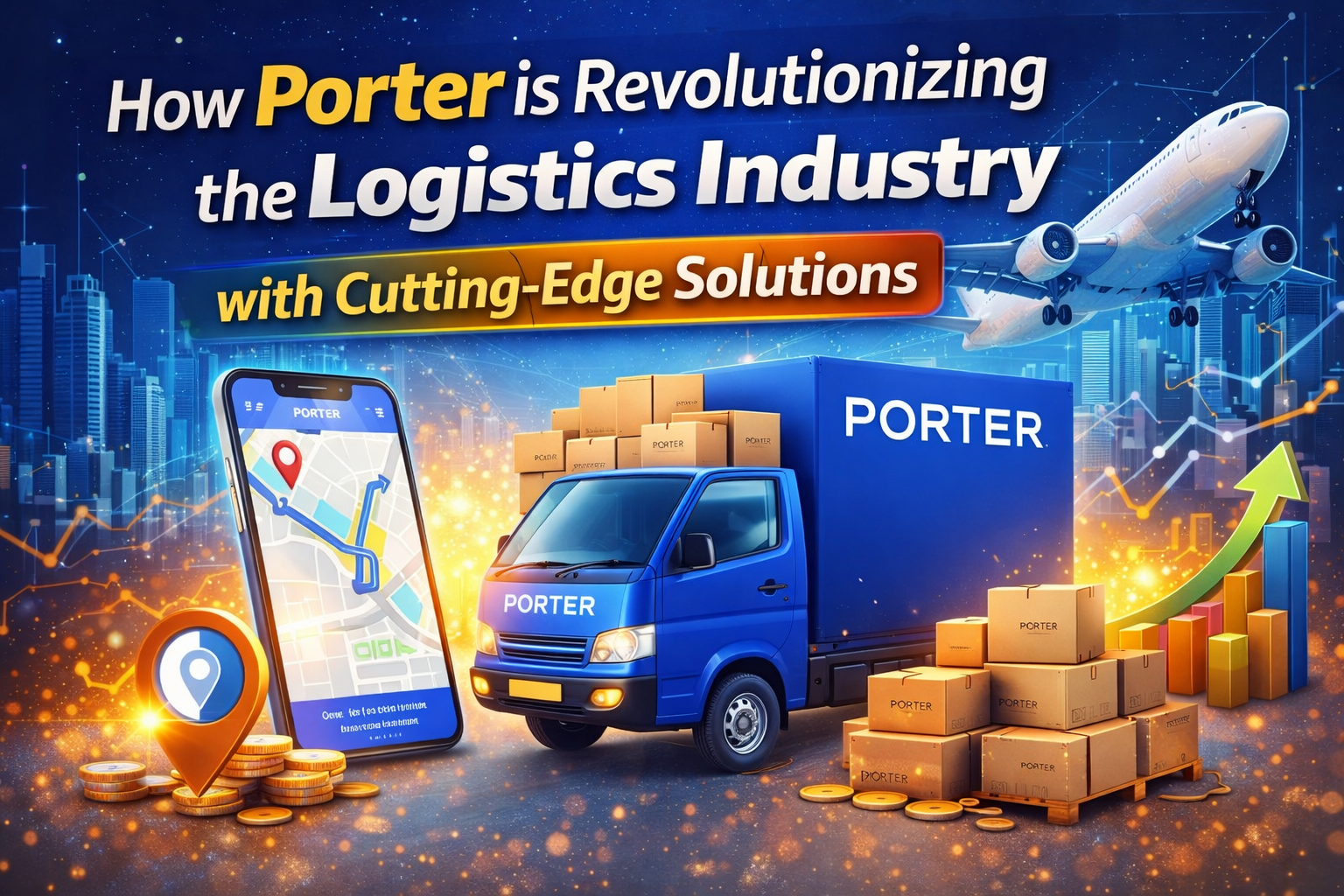
What truly sets Porter apart is its AI-powered algorithm that matches customers with delivery partners in real time. The platform handles everything — order collection, vehicle allocation, GPS tracking, fare bidding, and CRM — in one automated tech stack. Whether you need a 2-wheeler for a small parcel or a 14FT canter for bulk freight, Porter’s smart system finds the best match based on your location, timing, and cargo type. This seamless, driver-friendly interface has helped Porter eliminate delays and build a fully scalable logistics engine that serves both B2B and B2C customers with equal efficiency.
3. From Trucks to Two-Wheelers — A Smart Pivot
Porter didn’t just grow, it evolved. Initially focused on truck bookings, the company made a bold strategic shift — ramping up its two-wheeler logistics operations to fill the void left by the collapse of competitors like Dunzo. Today, two-wheelers account for 60% of Porter’s orders The Ken, reflecting the company’s agility in responding to market shifts. This pivot proved critical in capturing the booming quick-commerce and hyperlocal delivery segment. Porter even removed trucks from its logo in 2023 to reflect this transformation — a symbolic move that showed the brand was serious about reinventing itself.
4. Explosive Growth — The Numbers Tell the Story
Porter’s growth trajectory has been nothing short of remarkable. The company clocked 15X revenue growth over the last five years The Ken, and in FY25, reportedly posted its first annual profit. Its operating revenue surged 56% to ₹2,733.7 crore in FY24, up from ₹1,737.4 crore in FY23. Outlook Business Today, Porter claims to work with 3 lakh owner-drivers and a total of 30 lakh customers, with its SME customer base surpassing 20 lakh. Inc42 Media The platform currently operates across 23 cities and is expanding rapidly — a true reflection of the trust businesses and drivers have placed in the brand.
5. Unicorn Status & Landmark Funding
Porter officially entered the unicorn club on May 8, 2025, after raising a $200 million Series F round led by Kedaara Capital and Wellington Management, valuing the company between $1.1 billion and $1.2 billion — making it India’s second unicorn of 2025. Porter has secured a total of $332.07 million over 8 funding rounds since its inception in 2014. StartupTalky Prominent backers include Peak XV Partners, Tiger Global, Lightrock, Vitruvian Partners, and Kae Capital — a roster that reflects deep investor confidence in Porter’s long-term potential.
6. Serving Every Business — From Kirana Stores to Amazon
Porter’s real power lies in its ability to serve diverse customers across the spectrum. From eCommerce giants like Amazon and Flipkart to small restaurants, Kirana shops, and D2C brands — Porter has built a logistics network that scales up or down based on business need. Its services span last-mile, middle-mile, and first-mile deliveries, along with supply chain management, packing and moving, and enterprise logistics on a variable engagement model. This versatility makes Porter not just a delivery app, but a comprehensive logistics partner for modern Indian businesses.
7. The Road Ahead — Global Ambitions & Future Plans
Porter isn’t stopping at India. The company aims to be present in the top 50 Indian cities within five years and plans to foray into five or six overseas markets Inc42 Media where its tech-powered aggregation model can thrive. Additionally, it plans to expand its SME pool to 1 crore+ by 2030, grow its driver-partner network to 12 lakh, and push sustainability by incorporating more electric vehicles into its fleet. The Indian logistics market is expected to grow to $159.5 billion by FY28 at a CAGR of 8–9% Inc42 Media — and Porter is positioning itself right at the center of that opportunity.
Conclusion
Porter’s journey from a bootstrapped idea to a $1.2 billion unicorn is a testament to the power of solving real problems with smart technology. By staying agile, prioritizing profitability, and continuously innovating, Porter isn’t just participating in India’s logistics revolution — it’s leading it. Whether you’re a small business owner or a large enterprise, Porter’s promise of “Anything, Anytime, Anywhere” is becoming more real with every delivery.