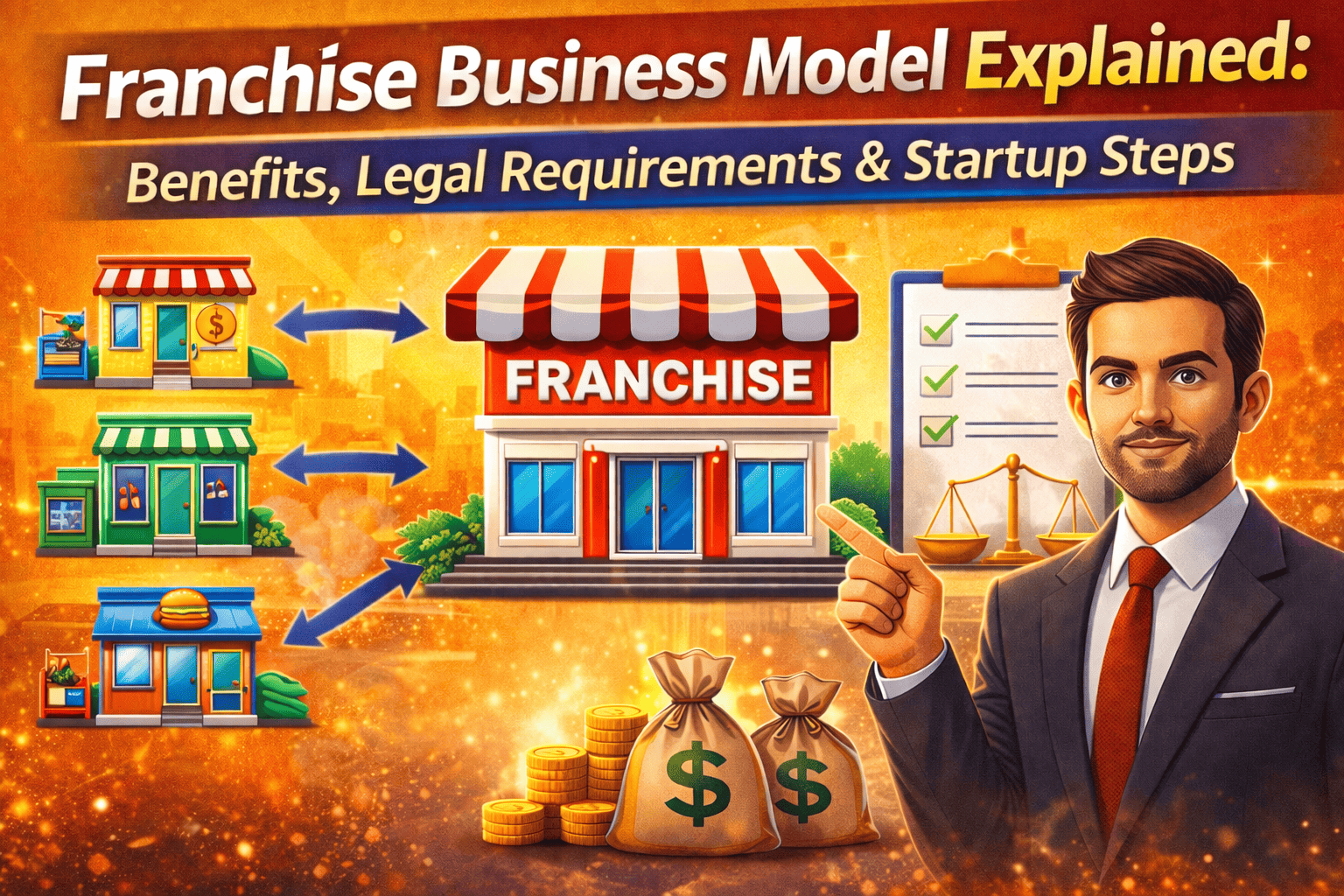
Franchise Business Model Explained: Benefits, Legal Requirements & Startup Steps
A complete guide for anyone looking to understand franchising and take their first step toward business ownership.
Have you ever walked into a McDonald’s in Mumbai and then another one in Delhi and noticed that everything — the menu, the taste, the packaging, even the seating — feels exactly the same? That’s franchising at work. And behind that consistency lies one of the most powerful and proven business models in the world.
Whether you’re an aspiring entrepreneur, a first-time business owner, or simply curious about how franchising works — this guide breaks it all down for you in simple, clear terms.
What Is Franchising and How Does It Work?
Franchising is a business arrangement where a business owner — called the franchisor — grants rights to an individual — called the franchisee — to operate a business under the franchisor’s established brand name and prescribed way of doing business.
Think of it this way: the franchisor has already done the hard work of building a brand, developing products, creating systems, and figuring out what works. The franchisee pays to use all of that — and in return, gets a running head start that an independent business owner simply doesn’t have.
The entire relationship is governed by a Franchise Agreement — a legal document that spells out each party’s rights, responsibilities, fees, and key terms. Before signing anything, prospective franchisees receive a comprehensive disclosure document that gives them full transparency about the franchisor and the terms of the deal, as required by government regulators.
In practical terms, franchisees typically pay two kinds of fees:
- An initial fee to enter the franchise relationship
- A continuing royalty to remain part of the system
Both fees cover the license to use the franchisor’s brand, business systems, and intellectual property. In exchange, franchisors provide ongoing guidance, training, and support to ensure every franchisee delivers a consistent experience to customers.
Key Benefits of the Franchise Model for Franchisees
One of the biggest reasons people choose franchising over starting an independent business is the unique combination of freedom and support it offers. You own and manage your own business — but you’re not alone.
Here’s what franchisees typically gain when joining an established franchise system:
Brand Recognition You don’t have to spend years building a name from scratch. Joining an established brand means immediate consumer trust and a much faster business launch.
Training and Support Franchisors provide structured training and ongoing coaching to help franchisees master the systems and standards needed to succeed.
A Proven Business Model. Independent businesses often fail because they’re figuring things out as they go. Franchisees can skip much of that trial-and-error because the model has already been tested and refined.
Marketing and Advertising Franchisees benefit from the franchisor’s broader marketing campaigns — national advertising, digital presence, promotional material — saving significant time and money.
A Built-In Peer Network As a franchisee, you become part of a network of other owners sharing the same brand. That community provides invaluable support, shared experiences, and real-world advice you simply can’t get as a solo entrepreneur.
This combination of resources makes franchising a popular path for both first-time business owners and experienced entrepreneurs looking for a new, structured opportunity.
How Franchising Maintains Brand Consistency Across Locations
Ever wondered how a global franchise brand manages to deliver the same experience across thousands of locations in dozens of countries? It comes down to systems, training, and accountability.
Experienced franchisors equip their franchisees with detailed operational manuals, comprehensive training programs, and continuous support. These tools give every franchisee — regardless of location — what they need to deliver consistent products and customer service that matches the brand’s standards.
Even though franchisees are independent owner-operators, franchisors regularly visit locations to provide support and check that standards are being maintained. When a franchisee falls short of brand expectations, the franchisor steps in to correct it — not as a punishment, but as part of their commitment to protecting the brand for everyone in the system.
This consistency is what builds customer trust. When a customer knows exactly what to expect from a brand, they come back — and that benefits every franchisee across the network.
Legal Requirements and Responsibilities in Franchising
Franchising is a regulated industry with specific legal protections designed to safeguard both franchisors and franchisees. In the United States, the Federal Trade Commission (FTC) requires franchisors to provide every prospective franchisee with a Franchise Disclosure Document (FDD) before any agreement is signed.
The FDD is a comprehensive document covering everything a prospective franchisee needs to know, including fees, financial performance data, training details, territory rights, and much more.
Here are the key elements you’ll find in the FDD and Franchise Agreement:
Initial Investment One of the most common reasons independent businesses fail is underestimating startup costs. The FDD includes a detailed breakdown of the total investment required to get the franchise up and running — so there are no surprises.
Fees and Ongoing Costs The Franchise Agreement clearly outlines all financial obligations — the initial fee, continuing royalties, and any other costs — so franchisees know exactly what they’re committing to.
Brand Standards Every franchise system operates by a set of brand standards, documented in a brand standards manual. These standards ensure quality and consistency across all locations and are updated regularly to keep the system competitive.
Support and Training The FDD details exactly what support and training the franchisee will receive — both at headquarters and in the field — throughout the life of the franchise relationship.
Important: Always engage a qualified franchise lawyer before reviewing or signing any franchise documents. A legal expert can help you conduct proper due diligence and ensure you fully understand what you’re agreeing to.
How to Get Started With a Franchise Business: Step by Step
Thinking about buying a franchise? Here’s a clear, practical roadmap to guide your journey:
Step 1 — Do a Honest Self-Assessment Start by understanding your own goals, skills, and financial position. Franchising is not a passive investment — it requires active dedication and day-to-day involvement. Ask yourself: What industries excite me? Am I financially ready? Do I have the time and energy this requires?
Step 2 — Research Franchise Options Explore industries and brands that align with your interests and financial capacity. Look for established franchise systems with a strong track record, good franchisee support, and a brand you genuinely believe in.
Step 3 — Review the FDD Carefully Once you’ve shortlisted a franchise, obtain and thoroughly review the brand’s Franchise Disclosure Document. This is where you’ll find everything about the business — the good, the complicated, and the non-negotiable. Don’t rush this step.
Step 4 — Talk to Existing Franchisees This is one of the most valuable steps you can take. Speaking with current franchisees gives you honest, real-world insight into what daily operations look like, how supportive the franchisor actually is, and whether the business lives up to its promises.
Step 5 — Secure Your Financing Most franchises require a significant upfront investment. Explore your financing options — personal savings, small business loans, franchise-specific funding programmes, or investor partnerships. Know your numbers before you commit.
Step 6 — Sign the Franchise Agreement and Begin Training Once you’ve completed your due diligence and you’re confident in your decision, sign the Franchise Agreement and dive into the initial training programme. This is where your franchise journey officially begins.
Is Franchising Right for You?
Franchising isn’t a guaranteed path to riches — no business model is. But for the right person, in the right industry, with the right brand, it offers something rare: a proven system, a ready-made support structure, and a much higher chance of success than going it alone.
The key is doing your homework. Understand the model. Study the FDD. Talk to franchisees. Get legal advice. And make sure the brand you choose genuinely aligns with who you are and what you want to build.
As with any major business decision, consulting with a qualified business advisor before you commit is always a smart move.