India’s franchise industry is experiencing unprecedented growth as we close out 2025, with the sector expanding at an impressive 30% annually. The combination of a thriving economy, rising consumer spending, and increasing entrepreneurial ambitions has created a goldmine of opportunities for investors seeking proven business models with lower risk profiles.
Whether you’re a seasoned business owner looking to diversify or a first-time entrepreneur seeking a reliable entry point into the business world, franchising offers the perfect blend of independence and support. This comprehensive guide explores the 10 most profitable franchise opportunities in India right now, spanning food services, retail, healthcare, wellness, and education sectors.
Why Franchising is Booming in India Right Now
Before diving into specific opportunities, let’s understand what’s driving this franchise revolution:
Technology Integration: Modern franchises leverage mobile apps, data analytics, and AI-driven tools to optimize operations and enhance customer experiences. From virtual try-ons to delivery tracking, technology is making franchises more efficient and profitable.
Health and Sustainability Focus: Consumers are increasingly drawn to brands that prioritize wellness, natural products, and environmental responsibility. Franchises aligned with these values enjoy stronger customer loyalty and premium pricing power.
The Cloud Kitchen Revolution: Delivery-only kitchens have transformed the food franchise landscape, allowing entrepreneurs to enter the restaurant business without massive dine-in space investments, dramatically reducing overhead costs.
Proven Business Models: Unlike starting from scratch, franchises offer tested systems, established supply chains, and comprehensive training—reducing the typical failure rates associated with new businesses.
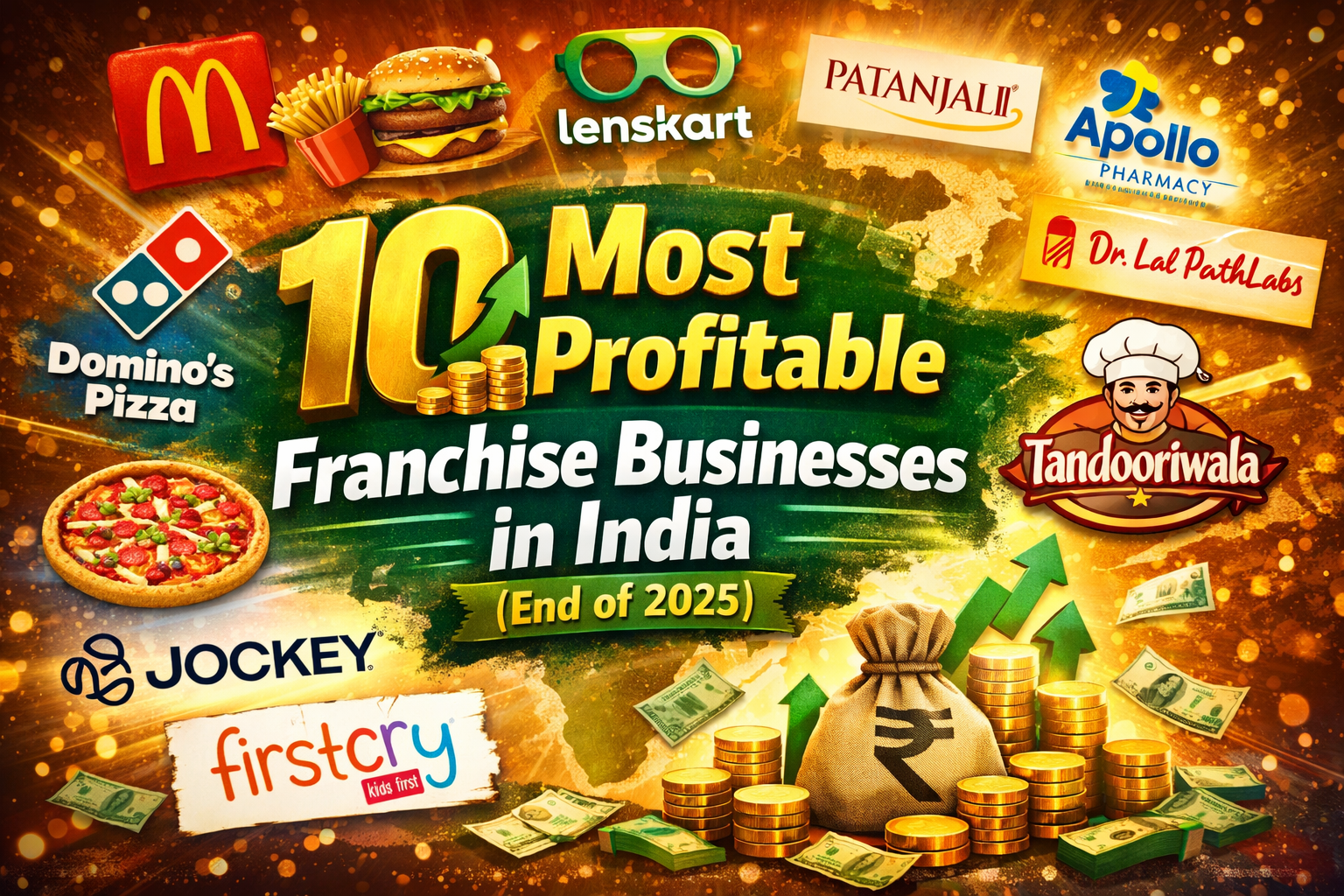
The Top 10 Most Profitable Franchises in India (2025)
1. Tandooriwala
Sector: Multi-Cuisine Restaurant (Indian, Mughlai, Continental)
Investment: Under ₹50 Lakhs
Space Required: 1000-1500 sq. ft.
Outlets: 50+ globally
Why It Stands Out: Tandooriwala breaks the mold by eliminating royalty fees and hidden charges—a rarity in the franchise world that significantly boosts profitability. Led by a Michelin-starred chef, this brand combines authentic Indian flavors with contemporary dining aesthetics. The comprehensive support system covers everything from HR and recruitment to marketing and SOPs, making it ideal for first-time restaurateurs. With an affordable menu targeting middle-class customers and high-volume potential, Tandooriwala offers a break-even timeline of just 3-6 months.
2. Domino’s Pizza
Sector: Fast Food Chain
Investment: ₹1.25 Crore
Space Required: 500-1000 sq. ft.
Outlets: 1400+
Why It Stands Out: Domino’s isn’t just a pizza chain—it’s a household name with unmatched brand recognition across India. The famous 30-minute delivery guarantee drives exceptional customer retention, while the optimized supply chain and proven operational model ensure consistent profitability. Despite the higher investment, the return potential is substantial due to high customer volume and strong brand loyalty. Operating under Jubilant FoodWorks, you gain access to world-class systems and support.
3. FirstCry
Sector: Baby and Kids Products
Investment: ₹20-30 Lakhs
Space Required: 800-1200 sq. ft.
Outlets: 500+
Why It Stands Out: FirstCry dominates India’s baby care segment, a market experiencing explosive growth as urbanization and disposable incomes rise. The brand’s genius lies in its online-offline integration—franchisees benefit from both foot traffic and e-commerce spillover. Parents trust FirstCry for quality baby clothes, toys, diapers, strollers, and essentials, creating a loyal customer base with repeat purchase behavior. As India’s population continues to grow, the demand for baby products shows no signs of slowing.
4. VLCC
Sector: Beauty and Wellness
Investment: ₹30-70 Lakhs
Space Required: 1200-2000 sq. ft.
Outlets: 300+
Why It Stands Out: VLCC has pioneered the wellness revolution in India, capitalizing on growing health consciousness. The franchise offers comprehensive services including skincare, weight management, fitness training, and beauty treatments. With complete training and support in service delivery, marketing, and customer retention, VLCC makes it easy for entrepreneurs without prior wellness experience to succeed. The brand’s reputation for results-driven services ensures steady customer flow and high-value transactions.
5. Kidzee
Sector: Preschool Education
Investment: ₹12-15 Lakhs
Space Required: ~1500 sq. ft.
Outlets: 2000+
Why It Stands Out: Part of the prestigious Zee Learn group, Kidzee is India’s largest preschool chain, benefiting from increasing awareness about early childhood education. The franchise provides everything needed to run a successful preschool—curriculum materials, teaching methodology, training, and branding support. With parents willing to invest significantly in their children’s education, Kidzee offers stable, recurring revenue with strong profit margins. If you’re passionate about shaping young minds, this is your opportunity.
6. Dr. Lal PathLabs
Sector: Healthcare Diagnostics
Investment: ₹5-25 Lakhs
Space Required: 300-1000 sq. ft.
Outlets: 200+
Why It Stands Out: Healthcare is recession-proof, and diagnostic services are in perpetual demand. Dr. Lal PathLabs offers one of the most affordable franchise opportunities with low operational overhead compared to retail or food franchises. The brand’s decades-long reputation for accuracy and reliability ensures customer trust and consistent business. With preventive healthcare becoming a priority for Indians, diagnostic centers are witnessing steady growth. The relatively small space requirement makes this accessible even in smaller towns.
7. Apollo Pharmacy
Sector: Pharmacy Retail
Investment: ₹10-20 Lakhs
Space Required: 500-800 sq. ft.
Outlets: 4000+
Why It Stands Out: Apollo Pharmacy’s 24/7 operation model means continuous revenue generation, especially valuable in urban locations. As part of the trusted Apollo healthcare ecosystem, franchisees benefit from instant brand credibility. With India’s aging population and rising chronic disease prevalence, pharmaceutical products are essential purchases. The business is stable, predictable, and relatively easy to manage, making it perfect for entrepreneurs seeking consistent cash flow without high complexity.
8. Jockey
Sector: Clothing and Innerwear
Investment: ₹45-50 Lakhs
Space Required: 1000-1500 sq. ft.
Outlets: 1000+
Why It Stands Out: Jockey has dominated the innerwear market for decades, building a loyal customer base that values quality and comfort. Innerwear is a necessity category with consistent demand regardless of economic cycles. The brand’s reputation for durability means high customer satisfaction and repeat purchases. Jockey’s structured retail model, strong marketing support, and premium positioning allow for healthy profit margins. Fashion-conscious consumers are willing to pay a premium for the Jockey promise.
9. Patanjali
Sector: Ayurvedic FMCG Products
Investment: ₹10-20 Lakhs
Space Required: 300-800 sq. ft.
Outlets: 7000+
Why It Stands Out: Patanjali has created a movement around affordable, natural products, cultivating extraordinary brand loyalty. The product portfolio is vast—food items, personal care, wellness products, and household goods—giving franchisees multiple revenue streams. The investment is modest, but the return potential is high due to strong consumer demand and the brand’s price competitiveness. Health-conscious Indians increasingly prefer Ayurvedic alternatives, and Patanjali has positioned itself as the market leader in this space.
10. Lenskart
Sector: Eyewear Retail
Investment: ₹25-40 Lakhs
Space Required: 500-1000 sq. ft.
Outlets: 1000+
Why It Stands Out: Lenskart has revolutionized eyewear retail by combining necessity with style and affordability. The brand’s tech-driven approach—including AI-powered virtual try-ons and home eye testing—creates a superior customer experience. Eyewear is a necessity market with growing demand as screen time increases and eye health awareness rises. Lenskart’s model ensures high customer retention through prescription renewals and fashion-driven purchases, delivering strong ROI to franchisees.
Additional High-Potential Franchise Options
McDonald’s India
Investment: ₹25 Lakhs+ | Sector: Fast Food
The golden arches need no introduction. McDonald’s offers a globally proven business model with full operational support, though franchise opportunities are available only in select regions.
Jawed Habib
Investment: ₹25 Lakhs | Sector: Hair and Beauty
India’s leading salon chain provides professional training and business support, making it accessible even for beginners in the beauty industry.
Amul
Investment: ₹25,000-1 Lakh | Sector: Dairy Products
One of the lowest investment options on this list, Amul outlets benefit from the brand’s incredible trust and the constant demand for dairy products like milk, butter, cheese, and ice cream.
DTDC
Investment: ₹50,000-2 Lakhs | Sector: Courier and Logistics
With e-commerce booming, delivery services are in high demand. DTDC franchises run delivery hubs with full logistics and training support.
Tumble Dry
Investment: ₹18 Lakhs | Sector: Laundry Services
Urban lifestyles are driving demand for professional laundry services. Tumble Dry offers washing, ironing, dry cleaning, and doorstep pickup services.
Raymond
Investment: Varies | Sector: Premium Menswear
Raymond’s reputation in formal wear creates a built-in customer base, with full support for store setup and operations.
Key Benefits of Investing in Franchises
Brand Recognition: Instant credibility with customers who already know and trust the brand, dramatically reducing marketing costs and customer acquisition time.
Proven Systems: Access to tested operational procedures, supply chains, and business processes that have delivered results across multiple locations.
Comprehensive Training: Most franchisors provide extensive training covering operations, customer service, inventory management, and local marketing strategies.
Reduced Risk: Franchises have significantly lower failure rates compared to independent startups because you’re replicating success rather than experimenting.
Marketing Support: Benefit from national and regional advertising campaigns, social media presence, and promotional materials created by the franchisor.
Peer Network: Join a community of franchisees who share experiences, best practices, and solutions to common challenges.
Financial Advantages: Banks and investors view franchises as lower-risk investments, making it easier to secure financing.
Scalability: Successful franchisees can often expand to multiple locations, multiplying their investment returns.
Critical Factors to Consider Before Investing
1. Brand Reputation and Stability
Research the brand thoroughly. Check customer reviews, visit existing outlets, and speak with current franchisees about their experiences. A strong brand reduces your marketing burden significantly.
2. Financial Clarity
Understand the complete investment picture:
- Initial franchise fee and setup costs
- Ongoing royalty fees (typically 5-10% of revenue)
- Marketing contribution fees
- Working capital requirements
- Projected break-even timeline
- Realistic profit margins
Get everything in writing and have a lawyer review the franchise agreement.
3. Market Demand and Location
Analyze your target location’s demographics, competition, and foot traffic. A great franchise in the wrong location will struggle. Consider:
- Population density and income levels
- Proximity to competitors
- Accessibility and parking
- Local preferences and cultural fit
4. Franchisor Support
Evaluate the depth of support offered:
- Initial training duration and comprehensiveness
- Ongoing operational guidance
- Marketing and advertising assistance
- Supply chain reliability
- Technology systems provided
- Crisis management support
5. Personal Fit
Choose a franchise that aligns with your:
- Interests and passions (you’ll be more motivated)
- Skills and experience
- Time commitment capacity
- Long-term career goals
The Franchise Selection Process: Step-by-Step
Step 1: Self-Assessment
Determine your available capital, risk tolerance, time commitment, and personal interests. Be honest about your strengths and weaknesses.
Step 2: Market Research
Identify growing sectors and brands with strong performance. Visit franchise expos, research online, and talk to industry experts.
Step 3: Shortlist Opportunities
Create a list of 5-7 franchises that match your criteria. Request detailed information packets from each.
Step 4: Due Diligence
- Review the Franchise Disclosure Document (FDD) carefully
- Speak with at least 5-10 current franchisees
- Visit multiple franchise locations unannounced
- Analyze financial projections critically
- Consult with a franchise attorney and accountant
Step 5: Location Analysis
If you’ve narrowed to 2-3 options, analyze potential locations for each. Sometimes location availability determines the final choice.
Step 6: Financial Planning
Secure financing if needed. Prepare for both the initial investment and 6-12 months of operating expenses.
Step 7: Final Decision and Agreement
Once satisfied, sign the franchise agreement and begin the setup process with full franchisor support.
Common Mistakes to Avoid
Underestimating Total Costs: Many franchisees focus only on the franchise fee and forget about renovation, equipment, licenses, working capital, and living expenses during the ramp-up period.
Skipping Due Diligence: Never rely solely on the franchisor’s promises. Talk to franchisees who’ve been operating for at least 2-3 years.
Ignoring the Fine Print: Franchise agreements contain critical terms about territory rights, renewal conditions, exit clauses, and non-compete provisions. Have a lawyer review everything.
Choosing Passion Over Profit: While it’s important to like your business, don’t let emotion override market demand and financial viability.
Going It Alone: Successful franchisees leverage the franchisor’s systems and seek advice from the franchise network. Don’t try to reinvent the wheel.
The Future of Franchising in India
As we move into 2026, several trends will shape India’s franchise landscape:
Technology Integration: Expect more AI-driven customer service, data analytics for inventory optimization, and seamless omnichannel experiences.
Sustainability Focus: Franchises emphasizing eco-friendly practices, sustainable sourcing, and waste reduction will attract premium customers.
Tier 2 and Tier 3 City Expansion: As metros become saturated, franchises are expanding to smaller cities where competition is lower and overhead costs are more manageable.
Hybrid Models: The line between online and offline will continue to blur, with franchises offering click-and-collect, home delivery, and experiential retail simultaneously.
Health and Wellness: This sector will continue expanding as Indians prioritize preventive healthcare, fitness, and mental wellness.
Final Thoughts
India’s franchise market at the end of 2025 offers extraordinary opportunities for entrepreneurs willing to do their homework and commit to executing proven systems. From low-investment options like Amul and DTDC to premium opportunities like Domino’s and Jockey, there’s something for every budget and interest.
The key to franchise success isn’t just choosing the right brand—it’s about thorough preparation, realistic expectations, leveraging franchisor support, and consistent execution. The franchises listed in this guide have demonstrated strong performance, market demand, and profitability potential.
Remember: a franchise is a business partnership. Choose a franchisor you trust, in a sector you understand, with a brand customers love. With careful planning and dedicated effort, your franchise investment can generate substantial returns and build long-term wealth.
Frequently Asked Questions
How do I choose the best franchise for my budget?
Start by listing your total available capital (including reserves for 6-12 months of operations). Then filter franchises within your range and compare their expected ROI, break-even timelines, and ongoing costs. Don’t stretch your budget too thin—having working capital is crucial.
What’s the difference between FOFO and FOCO franchise models?
FOFO (Franchisee Owned, Franchisee Operated) gives you full control and flexibility but requires more hands-on management. FOCO (Franchisee Owned, Company Operated) means the franchisor handles operations while you invest capital—offering less control but more passive income potential.
How long does it typically take to break even?
This varies significantly by industry and brand. Fast-food franchises might break even in 12-24 months, while retail might take 18-36 months. Tandooriwala offers one of the fastest break-even timelines at 3-6 months. Always ask franchisors for realistic timelines based on actual franchisee performance.
Can I own multiple franchise locations?
Yes, many franchisors encourage multi-unit ownership once you’ve proven success with your first location. Multi-unit operators often receive discounts on franchise fees and benefit from economies of scale.
Where can I find franchise opportunities?
Attend franchise expos in major cities, visit brand websites (most have dedicated franchise sections), work with franchise consultants, or explore franchise listing websites that aggregate opportunities across industries.
What income can I realistically expect?
Income varies dramatically by brand, location, and your management skills. Some franchises generate ₹50,000-1 lakh monthly profit, while others can generate ₹5-10 lakhs or more. Request Item 19 information (if available) showing actual franchisee earnings, and speak with current franchisees about their real-world experience.