Introduction
In a major move for India’s clean energy future, the Adani Group has announced its entry into the large-scale battery energy storage sector with a landmark project. With a capacity of 1,126 MW / 3,530 MWh, this initiative is poised to become India’s largest battery energy storage system (BESS) at a single location. The deployment is expected to be commissioned by March 2026 and will utilise cutting-edge lithium-ion battery technology, marking a new era for grid stability, renewable integration, and energy security.
Project Overview
Capacity & Scale: The project will deliver 1,126 MW of power and store 3,530 MWh of energy—enough to supply power for several hours during peak demand.
Location: It is being built at the Khavda Renewable Energy Park in Gujarat, one of the world’s largest renewable energy parks.
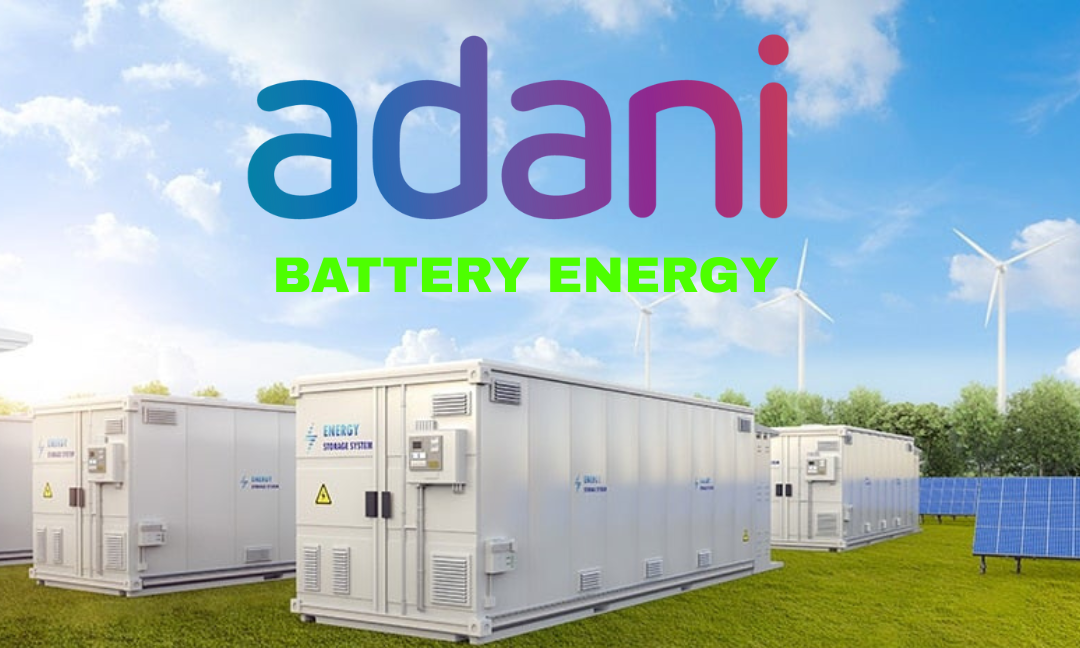
Technology: The system will deploy more than 700 BESS containers, use lithium-ion battery technology, and integrate with advanced energy management systems to maximise performance and reliability.
Timeline: Commissioning is scheduled for March 2026.
Strategic Ambition: Beyond this flagship project, the Adani Group aims to deploy an additional 15 GWh of BESS capacity by March 2027, with a long-term goal of 50 GWh over the next five years.
Why It Matters: The Role of Grid-Scale Energy Storage in India
1. Enhancing Grid Reliability & Peak Load Management
Large-scale storage enables the power grid to meet peak demand surges without depending solely on fossil fuel backup. This project will help ease peak load pressures, reduce transmission congestion, and ensure a more stable energy supply.
2. Reducing Solar Curtailment & Enabling Renewable Integration
When renewable energy generation exceeds demand, it often leads to curtailment. A project of this scale allows energy shifting—storing excess solar or wind energy and releasing it when demand rises. This supports India’s transition to a low-carbon electricity system.
3. Strengthening Energy Security & Clean Power Supply
By enabling round-the-clock clean energy availability, the project enhances energy independence and strengthens India’s clean power infrastructure. It’s a strategic leap forward toward a renewable-powered future.
What Makes This Project Stand Out
One of the world’s largest single-location BESS projects—most large storage facilities are distributed across multiple sites, making this centralised system unique.
Deployment of over 700 containers, reflecting a modular, scalable design that simplifies installation and maintenance.
Integration with the Khavda Renewable Energy Park, creating a massive renewable + storage ecosystem that boosts efficiency and sustainability.
Ambitious roadmap for expansion, with the Adani Group targeting 50 GWh of battery capacity within five years—cementing its leadership in India’s clean-energy transformation.
Implications for India’s Clean Energy Transition
Decarbonising the power sector: As India moves toward its net-zero goals, energy storage becomes the key enabler for managing renewable variability and ensuring reliable power.
Boosting investor confidence: This large-scale project demonstrates that Indian companies are capable of executing grid-scale storage solutions, encouraging further domestic and global investment.
Supporting policy growth: India’s evolving energy storage regulations and renewable mandates align with projects like this, which set industry benchmarks for clean-energy integration.
Job creation and supply-chain growth: The manufacturing, logistics, installation, and maintenance sectors will benefit significantly, strengthening India’s green economy.
Global leadership potential: With this project, India steps closer to becoming a global leader in large-scale renewable energy storage and innovation.
Challenges & Considerations
Technology & supply chain: While lithium-ion technology is mature, challenges around sourcing, recycling, and lifecycle management remain.
Grid integration: Coordinating such a massive storage system with India’s grid infrastructure will require advanced management systems and policy support.
Financial viability: The success of grid-scale BESS depends on supportive tariff frameworks and viable business models for energy trading and storage services.
Environmental impact: Land use, battery disposal, and recycling must be carefully managed to maintain sustainability.
Scalability: Meeting the long-term target of 50 GWh will demand robust partnerships, financing, and technological innovation.
What to Watch Next
Progress on construction and commissioning leading up to March 2026.
Details about battery suppliers and energy management technology partners.
Integration updates with the Khavda Renewable Energy Park and its grid operations.
Expansion toward 15 GWh by 2027 and the larger 50 GWh storage target.
Policy developments around storage incentives, safety, and standardisation in India.
Conclusion
The Adani Group’s 1,126 MW / 3,530 MWh battery energy storage project at Khavda marks a defining moment in India’s clean-energy revolution. By combining large-scale renewable generation with powerful storage, Adani is tackling the key challenges of intermittency, peak demand, and grid reliability.
This initiative positions India as a global leader in sustainable energy infrastructure. As the nation accelerates toward a low-carbon, energy-secure future, Adani’s pioneering project demonstrates how technology, ambition, and sustainability can come together to transform the power landscape.