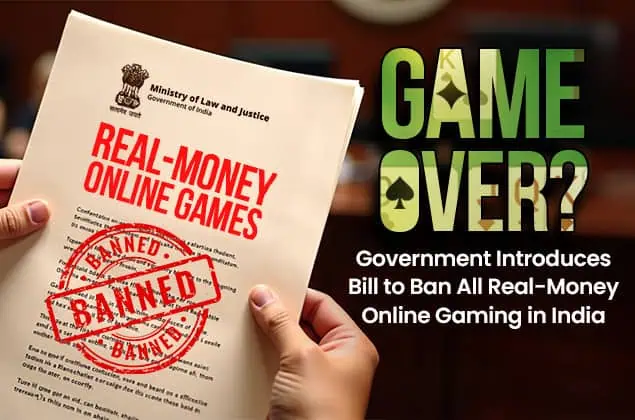
In a move that has sent seismic waves through one of the world’s largest digital markets, India’s new online gaming bill has officially passed through Parliament. The legislation, aimed at creating a clear regulatory framework, has drawn a definitive line in the sand, prohibiting games where users deposit money with the hope of winning more.
The immediate consequence? Some of India’s most prominent real-money gaming (RMG) platforms have begun a swift and dramatic pivot, voluntarily suspending their core revenue-generating services. This blog breaks down the rapid industry response and what it means for the future of online gaming in India.
The Bill at a Glance: What Changed?
The central tenet of the new bill is its ban on “pay-to-play” online real-money games. This refers to any game where a user deposits cash—directly or indirectly—to participate with the chance of winning a monetary prize. The law carves out an exception for games of skill, but its initial interpretation has led major companies to hit the pause button on all cash-based contests as they seek clarity and ensure compliance.
Industry Giants Hit Pause: A Platform-by-Platform Breakdown
The reaction from leading gaming companies was swift and uniform, highlighting the bill’s significant impact.
1. Dream11 & Dream Sports: A Strategic Retreat
Dream11, the fantasy sports behemoth and unofficial flagbearer of India’s RMG sector, has taken immediate action.
Core App: The company has suspended all “pay-to-play” fantasy sports competitions on its main Dream11 app. A notification assures users that their account balances remain safe and withdrawable.
New Ventures: Dream Sports’ newly launched fantasy app, Dream Picks, and its casual gaming app, Dream Play, have had their real-money features halted entirely. Reports suggest sponsored competitions on Dream11 may also be paused once the bill receives the President’s assent and is formally notified into law.
2. Mobile Premier League (MPL): Shutting Down Real-Money Ops
MPL, a diversified gaming platform, announced it has closed all of its real-money gaming options.
A company spokesperson stated, “While new deposits will no longer be accepted, customers will be able to withdraw their balances seamlessly.”
MPL signaled a significant strategic shift, emphasizing its commitment to becoming a leader in “competitive, free-to-play, non-money-based gaming experiences.”
3. Gameskraft: A Precautionary Hold on Rummy
Gameskraft, a major player in the online rummy space with platforms like RummyCulture, has suspended its “Add Cash” and gameplay services.
The company called this a “precautionary action” to ensure compliance with the evolving laws, reassuring users that their existing funds are secure and that withdrawal services remain active.
4. Nazara Technologies’ PokerBaazi: Ceasing Operations
In a stock market filing, Nazara Technologies announced that its affiliate firm, Moonshine Technology (which operates PokerBaazi), has “ceased offering real money online gaming operations.”
The company stated this was done “out of an abundance of caution” and that future steps will be evaluated once the bill is formally passed.
Analysis: What Does This Mean for the Future?
This industry-wide suspension, while dramatic, is likely a short-term measure. Here’s what to expect next:
Clarity and Compliance: Companies are pausing operations to avoid any legal risk while they seek official clarification on the bill’s specifics, particularly the definitions and boundaries between games of skill and chance.
Strategic Pivot to Free-to-Play: Platforms like MPL are already announcing a reinforced focus on free-to-play (F2P) models. This could involve ad-supported games, subscription services for premium content, and tournaments with non-cash rewards.
Potential for Licensed Skill-Based Gaming: The bill envisions a regulatory framework. Once established, it is possible that games officially classified as “games of skill” (like fantasy sports or rummy) could return under a new, licensed regime, though likely with stricter oversight and compliance requirements.
Market Consolidation: The new regulatory burden may be too heavy for smaller startups to bear, potentially leading to a consolidation where only the largest, best-funded players (like Dream11 and MPL) can navigate the new landscape and survive.
Conclusion: The End of an Era and the Dawn of a New One
The sudden quiet on India’s top gaming apps marks the end of a largely unregulated boom period for real-money gaming. While disruptive, this regulatory shake-up was perhaps an inevitable step for a multi-billion dollar industry touching millions of users.
The immediate future belongs to free-to-play, ad-supported, and skill-based tournament models. For the giants of the industry, the challenge is no longer just user acquisition; it’s about agile adaptation, working with regulators, and rebuilding their core business models for a new, regulated era of Indian gaming. The playbook has been rewritten overnight.