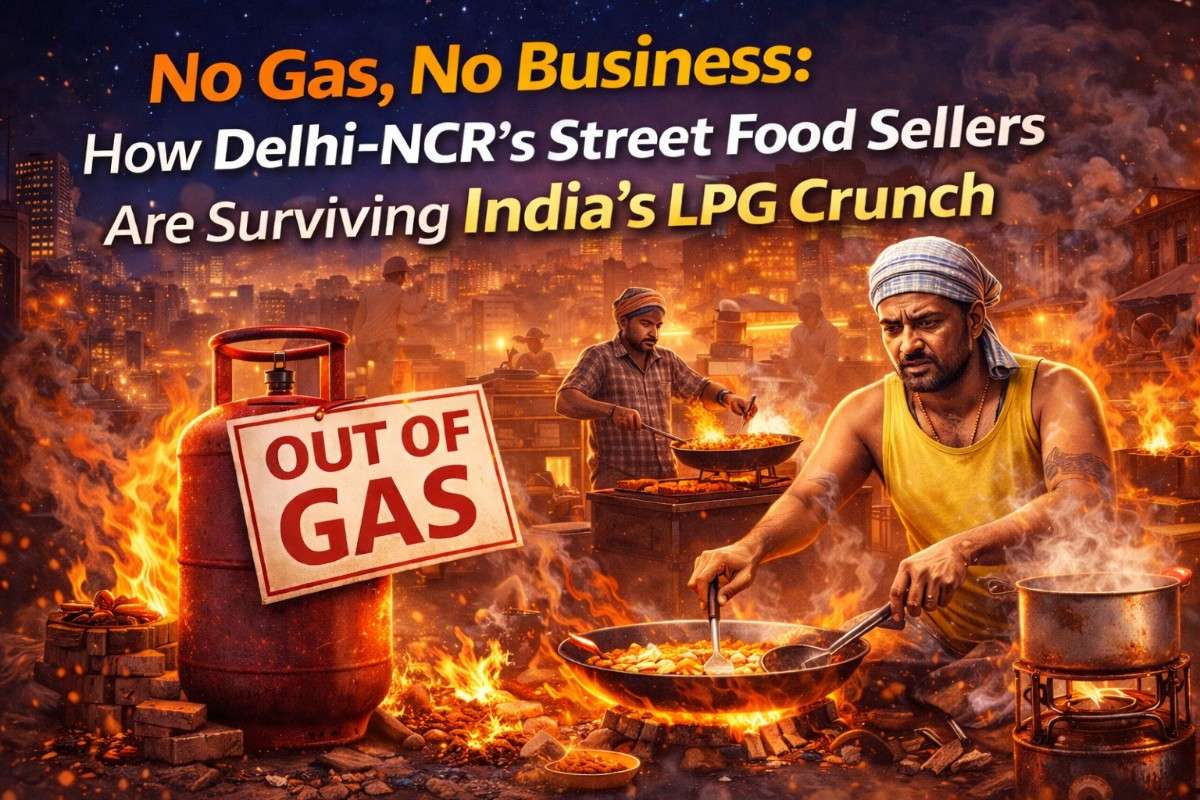
Walk past any street food stall in Ghaziabad, Noida, or Delhi right now and you’ll notice something different — higher prices, shorter menus, and in some cases, a handwritten notice that simply says: “Gas nahi hai.”
India is in the middle of a serious LPG crisis, and nowhere is it hitting harder than at the bottom of the food chain — the samosa sellers, chai tapris, paratha stalls, and momo vendors who keep Delhi-NCR fed every morning.
What Is Happening?
The crisis traces back to a conflict 6,000 kilometres away. Following large-scale US-Israeli coordinated strikes on Iran on February 28 and Tehran’s retaliation, Iran has blockaded the Strait of Hormuz — one of the world’s most critical energy shipping routes — sending global fuel supply into disruption. TaxBuddy
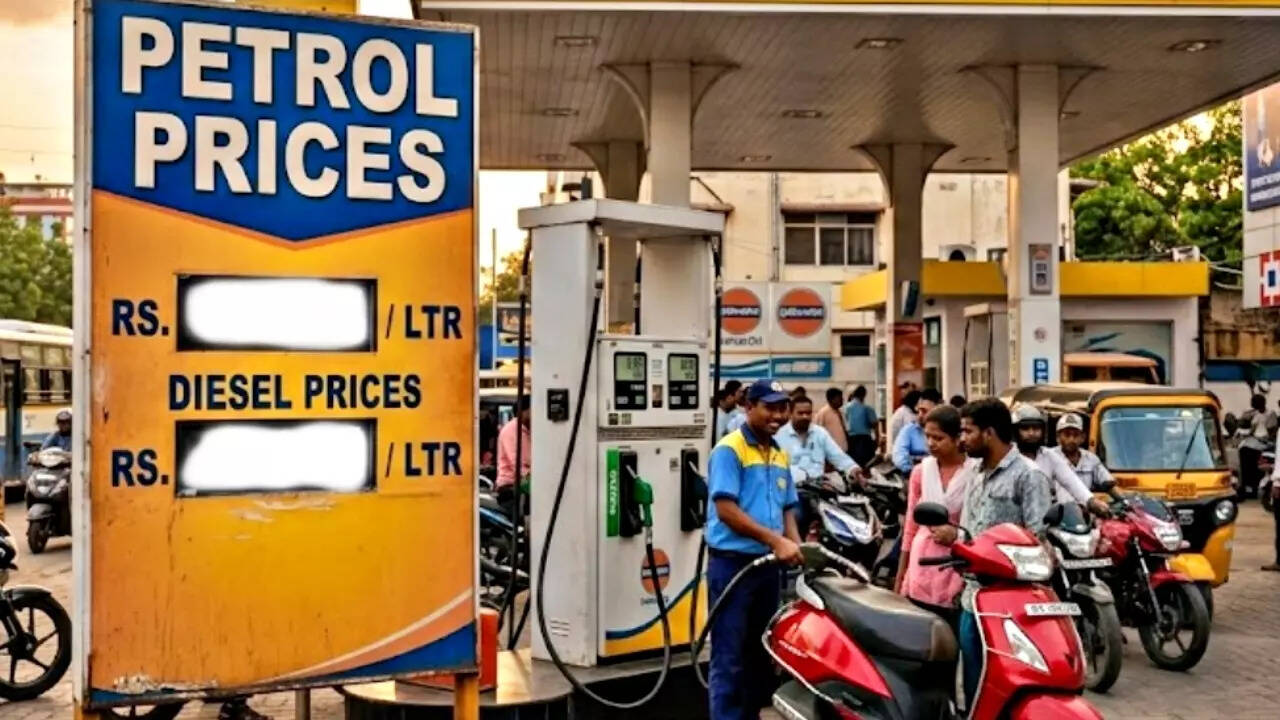
The impact has landed hard and fast in Indian kitchens. Domestic LPG cylinders have been hiked by ₹60, while commercial cylinders have jumped by ₹144 across major Indian cities. In Delhi, a 14.2 kg domestic cylinder now costs ₹913 — up from ₹853 last month. Sgieurope
And that’s just the official price. A 19-kg commercial LPG cylinder that normally costs around ₹1,900 is now being sold for nearly ₹3,000 in the black market. Tracxn
The Street Vendors Bearing the Brunt
For small food vendors who operate on wafer-thin daily margins, this is not just an inconvenience — it is an existential threat.
A tea seller in Indirapuram told the Times of India that gas was earlier available at about ₹85 per kilogram but has now shot up to nearly ₹200 per kilogram. Tracxn
A paratha seller in Sector 16A, Noida, said he cannot raise food prices for customers despite rising costs — and if LPG prices stay this high, he may be forced to shut down his stall and return to his village in Banda. Tracxn
A street food vendor near Raj Nagar District Centre in Ghaziabad said he now has to pay suppliers in advance just to secure a cylinder Tracxn — a sign of how scarce supply has become through official channels.
Several street food sellers have already raised prices of items like samosas, rotis, and snacks by up to 50 percent. OneCricket
Delhi’s Iconic Dishes Are Disappearing Too
The shortage is now showing up on menus — or rather, in their absence. Chole bhature is disappearing from plates across Delhi, with street vendors putting up posters declaring that the dish will no longer be available due to gas shortages. A famous chole bhature shop in Connaught Place has also put up a notice saying cylinders are unavailable and the dish cannot be prepared. Cricket Bureau
What Are People Doing?
Desperate vendors are finding workarounds — not all of them legal. Some vendors are buying small quantities of LPG from illegal bottling units just to manage their daily work. Tracxn
Others are switching fuels entirely. In parts of Delhi and Noida, induction cooktops are flying off shelves — a retailer in Kalkaji, South Delhi reported selling more than 50 units in a single day, leaving the store with very limited remaining inventory. Founder Magazine
What the Government Says
Government sources say India has sufficient LPG stocks overall, and that the panic seems driven more by localised bottlenecks, temporary booking restrictions, and precautionary stockpiling than by a genuine national shortage. TaxBuddy The government is reportedly directing oil refineries to increase LPG production.
Union Minister of State for Petroleum Suresh Gopi said on Thursday that efforts are underway to bring the crisis under control and that avenues are opening for India to secure additional supply. Cricket Bureau
The Bigger Picture
For India’s millions of street food vendors, government reassurances offer cold comfort right now. Every day without affordable gas is a day of lost income — or a day of debt.
The Strait of Hormuz crisis may be a geopolitical story at the global level. But on the streets of Ghaziabad, Noida, and Delhi, it is playing out one cancelled samosa, one closed stall, one displaced vendor at a time.