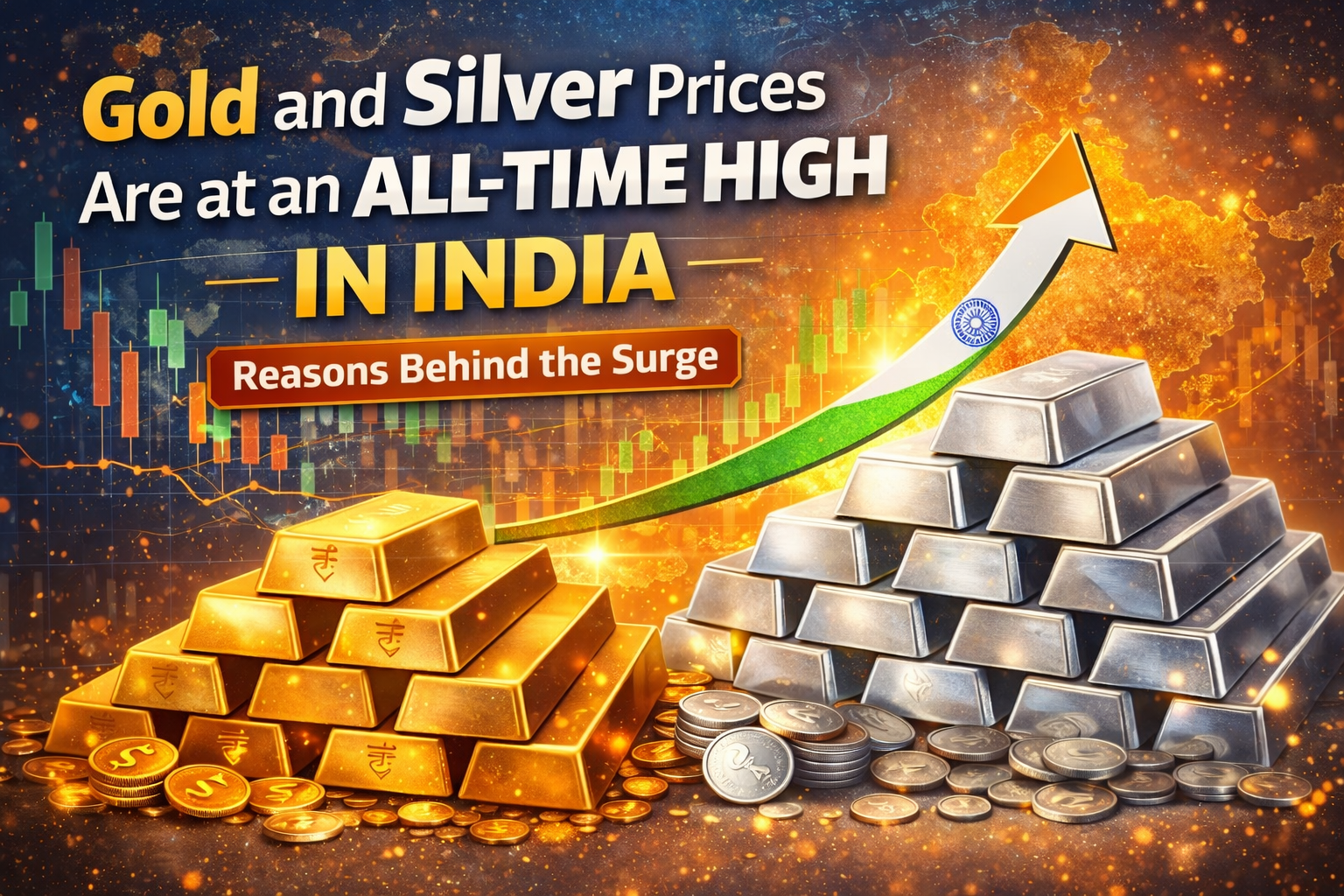
If you’ve been following the precious metals market lately, you’ve probably noticed something striking—gold and silver prices in India have skyrocketed to record highs. Whether you’re planning to buy jewelry for an upcoming wedding or considering precious metals as an investment, understanding why prices have surged can help you make informed decisions. Let’s explore the key factors driving this unprecedented rise.
The Rupee’s Weakness Against the Dollar
One of the biggest culprits behind soaring gold and silver prices is the weakening Indian rupee. Since India imports the majority of its gold and silver, any depreciation in the rupee against the US dollar directly impacts domestic prices. When the rupee weakens, we end up paying more for the same amount of gold or silver, and this currency fluctuation has been a major contributor to the current price levels.
Global Uncertainty Driving Safe-Haven Demand
In times of economic and geopolitical turbulence, investors worldwide flock to safe-haven assets—and gold and silver top that list. Ongoing conflicts, trade tensions between major economies, and fears of recession have created an environment of uncertainty. When stock markets become volatile and currencies unstable, precious metals shine as reliable stores of value, pushing their prices higher globally, which naturally affects Indian markets.
Central Banks Are Hoarding Gold
It’s not just individual investors buying gold. Central banks around the world, including India’s Reserve Bank, have been aggressively increasing their gold reserves. This institutional buying represents a massive vote of confidence in gold as a strategic asset for diversification. When central banks buy in such large quantities, they absorb significant supply from the market, creating upward pressure on prices that trickles down to retail consumers.
Inflation Is Eating Away at Currency Value
With inflation rates elevated both in India and globally, the purchasing power of currency is declining. Gold and silver have historically served as hedges against inflation, preserving wealth when paper money loses value. As people seek to protect their savings from inflation’s erosive effects, demand for precious metals increases, contributing to the price surge we’re witnessing.
India’s Cultural Love Affair with Gold
India’s deep cultural connection with gold cannot be overlooked. The wedding and festival seasons bring massive spikes in gold purchases for jewelry and gifts. This seasonal demand, particularly during Diwali, Akshaya Tritiya, and the wedding months, creates additional pressure on already elevated prices. When cultural demand meets global supply constraints, prices naturally climb even higher.
Taxes and Duties Add to the Burden
The final price you pay for gold or silver in India isn’t just about international rates. Import duties, GST, and making charges by jewelers all add layers to the cost. Current import duties on gold stand at significant levels, and when combined with GST and craftsmanship charges, the retail price can be substantially higher than the base metal price.
Supply Constraints and Market Speculation
Finally, reduced mining output in some gold and silver producing regions, combined with speculative trading in commodity markets, has created supply-demand imbalances. When supply tightens while demand remains strong or grows, basic economics tells us prices will rise—and that’s exactly what we’re seeing.
What Does This Mean for You?
Whether you’re a bride-to-be, an investor, or simply someone who values precious metals, these record prices require careful consideration. While high prices might seem discouraging, many experts believe gold and silver will continue to serve their traditional roles as wealth preservers, especially in uncertain times. The key is to stay informed, understand market dynamics, and make purchases aligned with your needs and financial goals rather than trying to time the market perfectly.