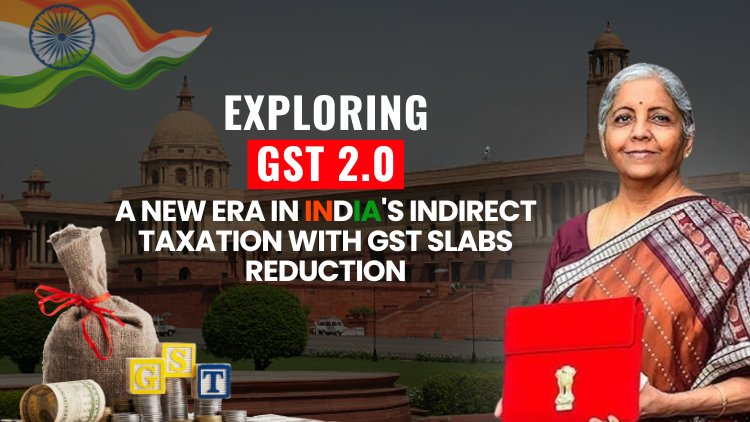
India has just witnessed its most significant tax reform since the introduction of the Goods and Services Tax (GST) in 2017. The GST Council’s recent approval of a revolutionary new tax structure promises to reshape the country’s economic landscape, putting more money in the pockets of common citizens while ensuring luxury consumption bears its fair share of the tax burden.
The Big Picture: From Complexity to Clarity
After eight years of operating under a complex four-tier GST system, India is finally getting the simplification it desperately needed. The new structure, effective September 22, 2025, transforms the existing maze of 5%, 12%, 18%, and 28% rates into a streamlined framework that’s easier to understand, comply with, and administer.
Finance Minister Nirmala Sitharaman’s announcement following a marathon GST Council meeting in New Delhi was clear: this reform is designed with the “common man” at its heart. The message is unmistakable – essential goods for daily life will become cheaper, while luxury and harmful products will bear higher taxes.

The New GST Architecture: Three Pillars of Taxation
1. The Merit Rate: 5% for Aam Aadmi Essentials
The expanded 5% slab represents the government’s commitment to making daily necessities affordable for every Indian household. This isn’t just about keeping existing items cheap – it’s about recognizing what truly constitutes essential consumption in modern India.
Personal Care Revolution The most immediate impact will be felt in bathrooms and medicine cabinets across the country. Items like hair oil, shampoo, toothpaste, toilet soap, toothbrushes, and shaving cream – all previously taxed at 18% – will now attract only 5% GST. For a middle-class family spending ₹2,000 monthly on personal care items, this translates to annual savings of ₹3,120.
Food Security Enhancement Dairy products including butter, ghee, cheese, and dairy spreads move down from 12% to 5%, making nutritious food more accessible. Pre-packaged snacks like namkeens, bhujia, and mixtures also benefit from this reduction, acknowledging their role in India’s diverse food culture.
Healthcare Accessibility Perhaps the most significant change is making individual health and life insurance completely tax-free, eliminating the previous 18% burden. Medical equipment like thermometers, glucometers, and diagnostic kits also move to 5%, while corrective spectacles become more affordable for the millions of Indians who need them.
Agricultural Empowerment The farming sector receives substantial support with tractors, tractor parts, bio-pesticides, irrigation systems, and agricultural machinery all moving to 5%. This comprehensive approach recognizes agriculture’s foundational role in India’s economy and the need to keep farming costs manageable.
Educational Support Maps, charts, globes, pencils, notebooks, and other educational materials are now completely tax-free, removing barriers to learning and supporting the government’s education initiatives.
2. The Standard Rate: 18% for Mainstream Consumption
The 18% slab becomes the new normal for most goods and services, but with a crucial difference – many items previously taxed at 28% are now moving down to this more reasonable level.
Automotive Transformation The automobile sector witnesses perhaps the most dramatic change. Small cars (petrol/hybrid up to 1200cc, diesel up to 1500cc), motorcycles up to 350cc, and three-wheelers all drop from 28% to 18%. This 10 percentage point reduction could significantly boost vehicle sales, supporting the automotive industry’s recovery and making personal transportation more affordable.
For a ₹8 lakh car previously attracting 28% GST (₹2.24 lakh in taxes), the new rate would result in ₹1.44 lakh in taxes – a saving of ₹80,000 that could influence countless purchase decisions.
Home Appliances Renaissance Consumer durables like air conditioners, large televisions, monitors, and dishwashing machines also benefit from the 28% to 18% reduction. This is particularly significant as these items represent aspirational purchases for India’s growing middle class.
Construction Cost Relief Cement’s move from 28% to 18% could have far-reaching implications for housing and infrastructure costs, potentially making homeownership more affordable and reducing construction project expenses.
3. The De-Merit Rate: 40% for Luxury and Sin Goods
The introduction of a 40% rate represents a bold policy statement about what kind of consumption the government wants to discourage. This isn’t just about revenue – it’s about social engineering through taxation.
Luxury Redefined High-end automobiles exceeding the size and engine capacity limits, motorcycles over 350cc, yachts, and personal aircraft now face the highest GST rate. This creates a clear demarcation between essential transportation and luxury mobility.
Sin Goods Penalty Tobacco products, pan masala, and carbonated beverages with added sugar face the 40% rate, reflecting their negative health impacts. This aligns with global best practices in tobacco taxation and supports public health objectives.
Gaming and Gambling Online gambling and gaming services also attract the 40% rate, acknowledging concerns about their social impact while generating revenue from what many consider harmful activities.

Economic Implications: Winners and Losers
The Winners
Households: The average Indian family will see immediate relief in their monthly budgets. Personal care items, food products, and healthcare costs will decrease, freeing up disposable income for other purposes or savings.
Small Businesses: Reduced compliance complexity means lower administrative costs. The simplified structure reduces disputes and makes tax calculations straightforward.
Manufacturing Sector: Lower input costs for many industries, especially automobiles, consumer goods, and construction, could boost competitiveness and potentially lead to price reductions for consumers.
Healthcare Industry: Reduced costs on medical equipment and supplies could make healthcare more affordable and improve access.
Agriculture: Comprehensive support through reduced taxes on equipment, inputs, and machinery could boost agricultural productivity and rural incomes.
The Challenges
Premium Consumers: Those who prefer luxury goods will face significantly higher costs. A high-end car buyer might pay substantially more in taxes under the new regime.
Tobacco Industry: The sector faces increased tax burden, which while aligned with public health goals, could impact employment in tobacco-growing regions.
State Revenues: States heavily dependent on taxes from luxury goods might see revenue fluctuations, though this could be offset by increased consumption of standard-rate items.
Implementation Timeline and Practical Considerations
The September 22, 2025, implementation date gives businesses and consumers time to prepare. However, the transition involves several practical considerations:
Business Adaptation: Companies will need to update their pricing, inventory valuation, and billing systems. The simplified structure should make this easier than previous GST changes.
Consumer Behavior: Lower taxes on essentials might boost consumption, while higher luxury taxes could shift purchasing patterns or delay big-ticket purchases.
Revenue Impact: While the government expects the reform to be revenue-neutral overall, the initial months will be crucial in determining the actual fiscal impact.
Global Context: Learning from International Experience
India’s move toward a simplified GST structure aligns with international best practices. Countries like Canada, Australia, and New Zealand operate with fewer, clearer tax rates. The concept of sin taxes on tobacco and luxury goods is also well-established globally.
However, India’s implementation is unique in its scale and the specific inclusion of items like online gaming and certain beverages in the highest tax bracket, reflecting local priorities and concerns.
Long-term Vision: Beyond Tax Collection
This reform represents more than just tax policy – it’s a vision for India’s economic future. By making essentials cheaper and luxuries more expensive, the government is:
- Promoting Inclusive Growth: Ensuring that economic growth benefits all segments of society, not just the affluent
- Supporting Domestic Manufacturing: Lower costs for inputs and consumer goods could boost the “Make in India” initiative
- Encouraging Healthy Consumption: Using tax policy to nudge consumers toward healthier choices
- Simplifying Business Operations: Reducing compliance burden to improve the ease of doing business
Potential Concerns and Mitigation Strategies
Revenue Volatility: The government will need to monitor revenue patterns closely and be prepared to make adjustments if necessary.
Implementation Challenges: Ensuring smooth transition across millions of businesses will require robust support systems and clear communication.
Inflation Management: While most essential items become cheaper, any price increases in luxury goods could affect inflation calculations.
Interstate Coordination: Different states might experience varying impacts, requiring coordination to ensure the federal structure remains balanced.
The Road Ahead: What to Expect
As September 22, 2025, approaches, several developments are likely:
Market Reactions: Stock prices of companies in benefiting sectors (automobiles, consumer goods) might see positive movement, while luxury goods companies might face pressure.
Consumer Behavior Shifts: Delayed purchases of luxury items as buyers wait for potential manufacturer price adjustments.
Business Restructuring: Companies might reorganize their product portfolios to optimize tax efficiency under the new structure.
Policy Fine-tuning: Based on initial implementation experience, minor adjustments might be made to rate classifications.
Conclusion: A Simplified Tax System for a Growing India
The GST 2.0 reform represents more than just a policy adjustment – it’s a fundamental reimagining of how India approaches indirect taxation. The new GST rate list for 2025 is designed around one core principle: simplifying the tax system while making it more equitable for all Indians.
The Simplification Achievement: With just two main operational slabs (5% and 18%), plus a 0% slab for essentials and a 40% slab for luxury goods, the GST structure is now dramatically easier to understand and comply with. This simplification will benefit everyone – from small businesses struggling with complex compliance to consumers trying to understand their bills.
The Equity Principle: By making daily essentials cheaper and luxury consumption more expensive, the government has created a progressive tax structure that supports inclusive growth. The common man will have more money in their pocket for necessities, while ensuring that luxury consumption contributes its fair share to national revenues.

Key Takeaways for Different Stakeholders:
For Consumers:
- Lower costs on daily necessities and healthcare
- Significant savings on household appliances and small vehicles
- Complete tax exemption on health and life insurance
- Higher costs only on luxury and harmful products
For Businesses:
- Reduced compliance complexity with fewer rate slabs
- Lower input costs for many sectors
- Clearer pricing strategies with simplified rate structure
- Easier GST return filing processes
For the Economy:
- Potential boost to consumption and domestic demand
- Support for key sectors like automobiles and consumer durables
- Alignment with public health goals through sin taxes
- Enhanced ease of doing business
As September 22, 2025, approaches, this reform could be remembered as the moment when India’s tax system truly matured – becoming simpler, fairer, and more aligned with the nation’s development goals. The success of this Next-Gen GST Reform will ultimately be measured not just in government revenues, but in the improved living standards of ordinary Indians who will benefit from a tax system designed with their needs in mind.
The countdown has begun. India’s tax system is about to become what it was always meant to be – a tool for growth, equity, and simplification rather than complexity and burden.